Low-Risk Investment Strategies for First-Time Investors
Starting your investment journey in the Indian stock market can feel overwhelming, especially with market volatility and financial risks involved. If you’re a first-time investor looking for safer ways to grow your money, low-risk strategies are the best place to start.
This guide shares proven approaches that prioritize capital protection while offering steady growth potential.
Why Choose Low-Risk Strategies?
Low-risk investment strategies:
- Help you gain confidence as a beginner
- Minimize losses during market downturns
- Encourage disciplined and long-term investing
- Are suitable even if you have limited capital
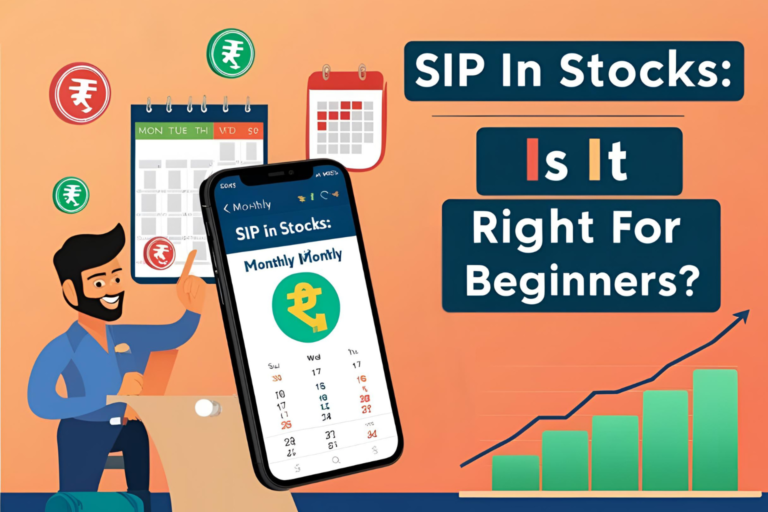
1. Start with SIPs in Blue-Chip Mutual Funds
Systematic Investment Plans (SIPs) allow you to invest a fixed amount monthly in mutual funds. Start with equity mutual funds that invest in large-cap (blue-chip) companies.
Why it works:
- Automatic investment removes emotional bias
- Blue-chip companies are financially stable
- Ideal for long-term wealth building
2. Invest in Blue-Chip Indian Stocks
If you prefer direct stock investing, focus on well-established companies like:
- Reliance Industries
- TCS
- HDFC Bank
- Infosys
- Hindustan Unilever
These companies have a strong track record, consistent earnings, and less volatility than small-cap stocks.
3. Diversify Your Portfolio
Don’t put all your money in a single stock or sector. Diversification across sectors—like banking, IT, pharma, and FMCG—can reduce overall risk.
Example: If tech stocks fall, pharma or FMCG might perform better, balancing your losses.
4. Use Asset Allocation
Balance your money between different asset classes:
- 60% Equity (stocks or mutual funds)
- 30% Debt (FDs, bonds, or PPF)
- 10% Cash or Liquid Funds
This helps weather market fluctuations and ensures you’re not overexposed.
5. Invest in ETFs or Index Funds
Exchange-Traded Funds (ETFs) and Index Funds track indices like Nifty 50 or Sensex. They’re low-cost and automatically diversified.
Benefits:
- No need to pick individual stocks
- Lower risk than active stock trading
- Ideal for long-term passive investors
6. Avoid Speculative Trades
Stay away from:
- Penny stocks
- Intraday trading
- Pump-and-dump schemes
These may seem exciting but carry high risk and are not suitable for beginners.
7. Focus on Long-Term Growth
Don’t panic over daily market fluctuations. Long-term investments tend to smooth out volatility and reward patient investors.
A ₹5,000/month SIP for 10 years in a good mutual fund could grow to ₹10–12 lakhs, depending on market performance.
8. Use a Paper Trading App to Practice
Before investing real money, try platforms like:
- Moneybhai by Moneycontrol
- TradingView (demo charts)
- StockGro (gamified trading)
This helps build confidence without risking capital.
FAQs
Q1: Can I start investing with just ₹1,000?
Yes. Many SIPs and mutual funds allow starting with ₹500–₹1,000.
Q2: Are blue-chip stocks risk-free?
No investment is completely risk-free, but blue-chip stocks have relatively lower risk due to strong fundamentals.
Q3: How long should I invest to see good results?
Ideally, stay invested for at least 3–5 years to benefit from compounding.
Q4: Should I take advice from social media stock tips?
Avoid relying solely on tips. Always verify from trusted sources or SEBI-registered advisors.
Q5: Is investing better than saving in a bank?
Yes, in the long run. Investments grow faster than bank savings, though they carry some risk.