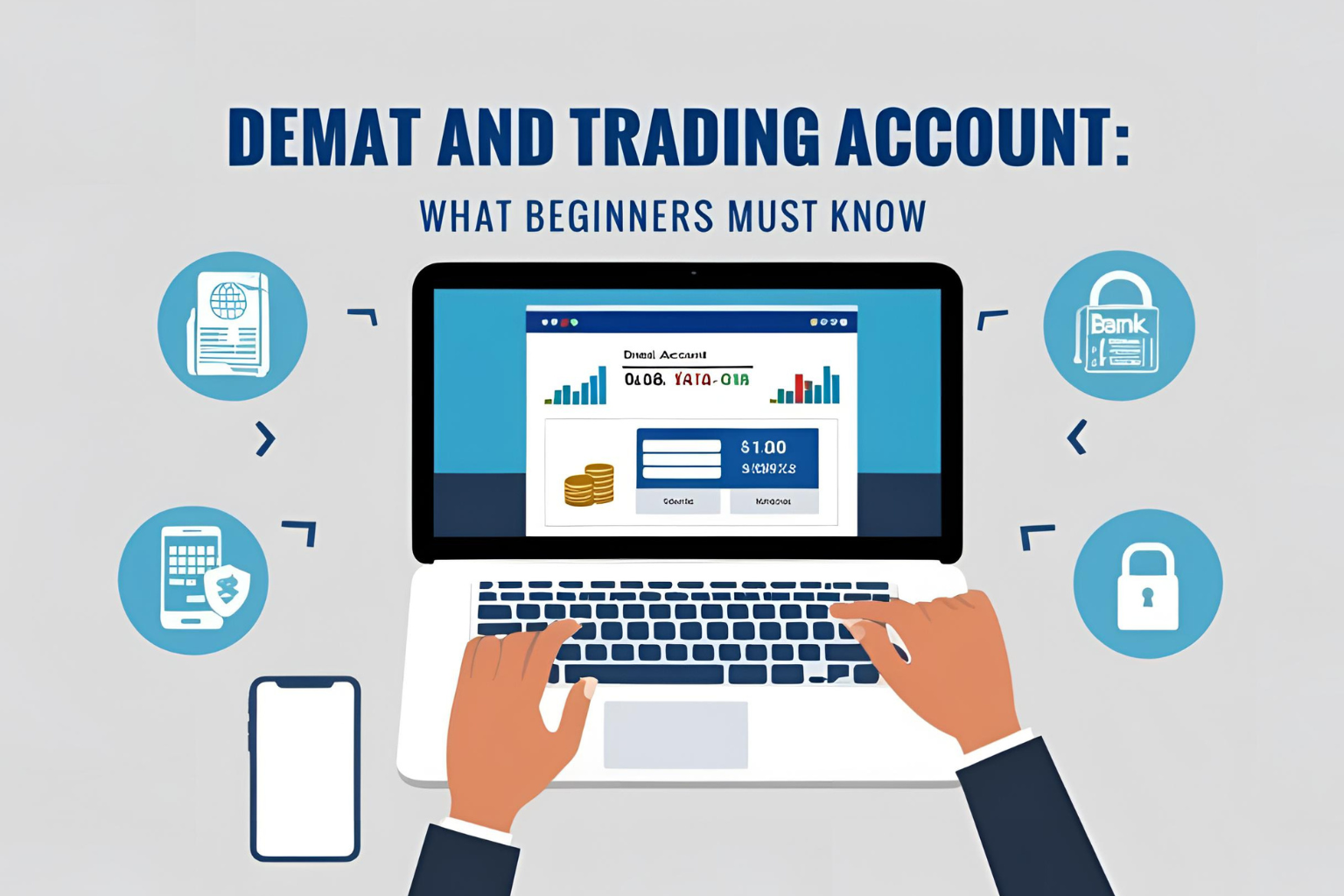
Demat and Trading Account: What Beginners Must Know
If you’re ready to invest in Indian stocks, your first step is to open a Demat and trading account. These two accounts are essential for buying, holding, and selling shares on the stock exchange. But what exactly are they? How are they different? And why do beginners need both?
This guide answers all your beginner-level questions in simple terms.
What Is a Demat Account?
Demat stands for Dematerialized account. It holds your shares and other securities in electronic form—just like a bank account holds your money.
Key Features:
- Stores shares, mutual funds, bonds, ETFs, etc.
- No risk of loss or theft (unlike physical share certificates)
- Required to receive shares when you buy stocks
Example: If you buy 10 shares of ITC, they are credited to your Demat account.
What Is a Trading Account?
A trading account is used to buy and sell stocks in the market. It acts as a link between your bank account and Demat account.
How It Works:
- You use your trading account to place orders (buy/sell)
- Shares get transferred to/from your Demat account
- Money is debited/credited from your bank account
Why Do You Need Both Accounts?
| Account Type | Purpose |
|---|---|
| Demat Account | To store your shares safely |
| Trading Account | To execute buy/sell orders on exchange |
You can’t trade stocks with just one of these. You need both.
How to Open a Demat and Trading Account in India
Step 1: Choose a SEBI-registered stockbroker
Popular beginner-friendly brokers:
- Zerodha
- Groww
- Upstox
- Angel One
Step 2: Complete online application
Submit:
- PAN Card
- Aadhaar
- Bank account details
- eSign with OTP (no paperwork needed)
Step 3: Account activation
Your account is usually active within 24–48 hours.
Charges to Know (Typical Range)
| Service | Approx. Fee |
|---|---|
| Account opening | ₹0 – ₹300 (often free) |
| Annual maintenance (Demat) | ₹200 – ₹500/year |
| Brokerage charges | ₹20 per trade (discount brokers) |
| STT, GST, Exchange fees | As per government regulations |
Things Beginners Should Remember
- Always link your bank account for smooth fund transfers
- Don’t share your login or OTPs with anyone
- Use a broker that offers good support and mobile access
- Avoid high-frequency trading in the beginning
Best Practices After Opening Your Account
- Practice using the broker app and TradingView for charts
- Start with a small investment (₹1,000–₹5,000)
- Set up alerts or watchlists for your favorite stocks
- Learn order types: market order, limit order, stop-loss
FAQs
Q1: Can I open just a Demat account without trading?
Yes, but you won’t be able to buy or sell stocks without a trading account.
Q2: Are Demat accounts free for life?
Some brokers offer free account opening, but most charge annual maintenance.
Q3: Is it safe to keep stocks in a Demat account?
Yes, it’s managed by SEBI-regulated depositories like CDSL or NSDL.
Q4: Can I have multiple Demat accounts?
Yes, but it’s better to start with one to keep things simple.
Q5: Do I need a Demat account to invest in mutual funds?
Not necessarily. You can invest in mutual funds directly or through a Demat account.